Fractal Time: Does History Move in Cycles?
Back in 2011 I watched an interview with Gregg Braden on the Conscious Media Network about fractal time and what it might mean for 2012, and posted it here because it was the clearest explanation I had heard of an idea I kept running into: that time has a shape, and the shape repeats.
2012 has come and gone, the video has since disappeared from the web, and the world did not end or transform overnight. But the underlying idea has outlasted the date it was attached to, so this piece is now about the idea rather than the year.
What fractal time means
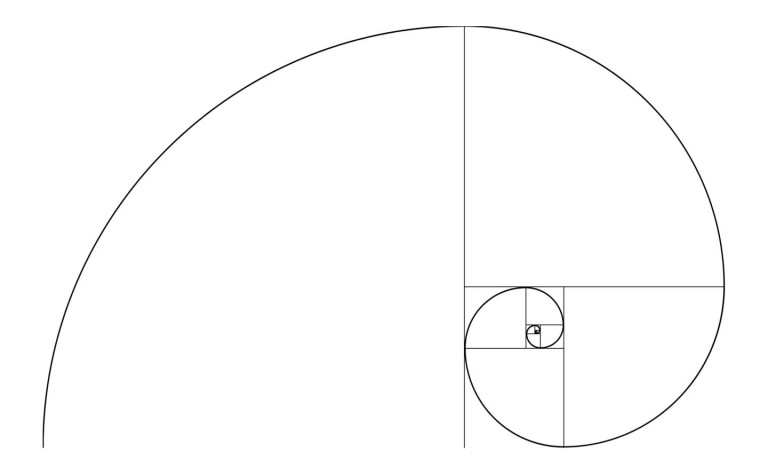
A fractal is a pattern that looks the same at every scale. Zoom in on a coastline, a fern or a branching tree and the small parts echo the whole. Braden’s proposal, set out in his book Fractal Time, is that history behaves the same way. Events do not repeat exactly, but the conditions that produced them return in cycles, and each return is a compressed version of the last. He uses the golden ratio, the same 0.618 that shapes the nautilus shell and the sunflower, to calculate when a cycle’s seed conditions come around again.
The practical version is this. Take a significant event in your own life, say a job loss, the end of a relationship or a move. Find the point 61.8 percent of the way from that event to now. Braden’s claim is that the emotional conditions of the original event tend to reappear around that point, in a new form, and that knowing it is coming lets you meet it differently. Whether the arithmetic is literally true or simply a useful frame, the exercise of looking for your own cycles is worth doing.
Why 2012 mattered, and why it still does not
The 2012 date came from the end of a 5,125 year cycle in the Maya long count calendar. Braden and others read it as the close of a world age rather than the end of the world, a turning point where the choices of a civilisation are amplified. Sceptics pointed out, fairly, that the Maya themselves left no prophecy of catastrophe and that calendars end the way odometers roll over. Both things can be true: the date was not magic, and the years around it did bring a real shift in how many people think about climate, technology and what a good life looks like.
What I take from it now is less about prophecy and more about attention. Cycles are real at every scale we can measure: seasons, tides, breath, heartbeat, sleep, the orbit of the planets. It would be strange if human affairs were the one exception. Learning to see where you are in a cycle, whether a season of building or a season of letting go, is most of what people mean by wisdom.
Finding your own cycles
Write down the five or six turning points of your life with their dates. Look at the gaps between them. Notice whether the intervals are getting shorter, which is what fractal compression predicts, and whether the same themes reappear. Then ask where you are now in relation to the last turning point. This is not fortune telling. It is the same practice as reading a tide chart before you go out on the water: not control, but preparation.
For the same pattern seen in numbers rather than time, the Fibonacci sequence piece covers the golden ratio and how to use it for your own growth, and the sacred geometry overview puts it in the wider picture.